What Every HR Leader Should Know About Hiring in the Age of AI
After three days of conversations with hundreds of HR leaders, recruiters, and talent acquisition professionals at SHRM26, five themes emerged again and again. These weren’t predications. These are challenges organizations actively trying to solve as hiring continues to evolve.
One question came up again and again:
How do organizations confidently hire the right people in the age of AI?
As AI continues to transform the hiring process, candidates can use technology to strengthen resumes, prepare for interviews, and present themselves more effectively than ever before. At the same time, organizations are looking for more objective ways to evaluate the qualities AI can’t demonstrate—critical thinking, reasoning skills, decision-making, and workplace mindset.
Here are the five biggest hiring trends we heard and why they matter for every HR leader.
1. AI Has Changed Hiring Forever
Artificial intelligence was one of the most common topics of conversation throughout SHRM26. HR leaders acknowledged that candidates now have access to tools that can strengthen resumes, optimize cover letters, and prepare for interviews with unprecedented ease.
While these technologies improve communication, they also introduce a new challenge.
How do you evaluate how someone thinks when technology can help perfect how they present themselves?
This question reinforced why organizations are looking beyond resumes and interviews alone. Employers want additional objective data to better understand how candidates solve problems, reason through complex situations, and make decisions.
What this means for HR leaders:
AI isn’t replacing hiring, it’s changing it. Organizations that combine traditional hiring methods with objective measures of critical thinking gain a more complete picture of candidate potential.
2. Organizations Are Looking Beyond Personality Assessments
One of the most common- and often most enjoyable- conversations at SHRM26 began with the same question:
“Oh… another personality assessment?”
The answer surprised many people.
Not exactly.
Many HR leaders told us they already use personality and behavioral assessments and value the insights they provide. Those tools help organizations understand how people tend to communicate, collaborate, and approach their work.
But they also shared a common challenge:
Personality is only part of the picture.
Organizations also want to understand how candidates think. How do they analyze information, evaluate evidence, reason through complex situations, and make sound decisions when the answer isn’t obvious?
At the same time, they recognize that how someone thinks and how someone approaches their work are complementary—not competing—sources of information. Measuring both critical thinking skills and workplace mindset provides a more complete understanding of a candidate’s potential and how they may perform in the role.
What this means for HR leaders:
The strongest hiring decisions rarely rely on a single data point. Organizations are increasingly combining resumes, interviews, behavioral insights, critical thinking skills, and workplace mindset to build a more complete picture of each candidate.

Beyond Personality Tests
Measure the critical thinking skills and workplace mindset that interviews can't reveal.
✓ Critical Thinking
✓ Workplace Mindset
✓ Leadership Potential
✓ Hiring & Development
3. Critical Thinking Is Becoming a Competitive Advantage
One of the most memorable moments from SHRM26 wasn’t a product demonstration—it was a simple question.
What’s the Most Important Quality of a Successful Employee?
Our interactive board invited attendees to place a sticky note under the quality they believed mattered most. The responses sparked thoughtful conversations around critical thinking, adaptability, leadership, communication, and decision-making.
Interestingly, there wasn’t one clear winner.
Instead, the activity highlighted something many organizations are experiencing: today’s most successful employees need more than technical expertise. They must be able to think critically, adapt to change, collaborate effectively, and make sound decisions in increasingly complex environments.
What this means for HR leaders:
Technical skills may help candidates qualify for a role, but critical thinking often determines how they perform once they’re in it.

4. Every Industry Faces Different Hiring Challenges, But the Same Goal
One of the most valuable aspects of SHRM was speaking with organizations from a wide range of industries.
Healthcare leaders discussed clinical reasoning and patient care. Corporate organizations focused on leadership development and succession planning. Higher education institutions talked about preparing students for workforce success, while government agencies emphasized consistency, fairness, and workforce readiness.
Although their challenges were different, their objective was remarkably similar:
Make better decisions about the people in their organization.
Regardless of industry, organizations are looking for reliable, objective data that helps them hire, develop, and retain employees who will succeed in their unique environments.
What this means for HR leaders:
Every organization has different hiring priorities, but every organization benefits from understanding how people think before making important talent decisions.
5. Better Hiring Starts with Better Data
Perhaps the biggest takeaway from SHRM26 was this:
Organizations aren’t trying to replace resumes or interviews.
They’re trying to strengthen them.
Throughout the conference, HR professionals consistently asked how they could reduce hiring risk while making more confident decisions. They wanted additional insights to complement traditional hiring practices—not replace them.
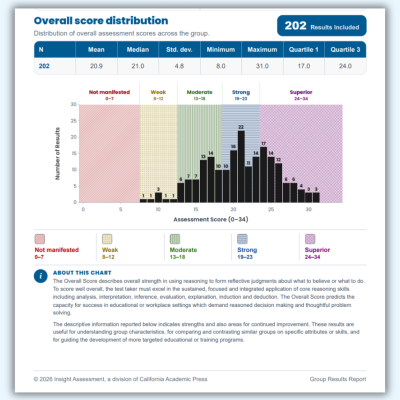
Critical thinking assessments provide organizations with objective information about how candidates reason, solve problems, and make decisions. When combined with interviews, experience, and other hiring tools, they help create a more complete picture of candidate potential.
What this means for HR leaders:
Hiring decisions will always involve human judgment. Better data simply helps make those decisions with greater confidence.

Turn Better Data Into Better Talent Decisions
Discover how organizations use objective measures of critical thinking and workplace mindset to strengthen hiring, identify high-potential talent, and develop future leaders.
One thing became clear after SHRM26: The hiring process is changing faster than ever. Artificial intelligence will continue to improve resumes, interviews, and candidate preparation.
That isn’t going away.
But the qualities organizations value most- critical thinking, sound judgment, reasoning, adaptability, and decision-making- remain distinctly human.
That’s why the organizations we met weren’t looking to replace their hiring process.
They were looking to strengthen it.
And that starts with understanding how people think before they’re on your payroll.
Whether you’re hiring your next employee, identifying future leaders, or investing in workforce development, objective insights into critical thinking, reasoning skills, and workplace mindset can help you build stronger teams and make more confident talent decisions.
Ready to see how organizations are using objective measures of critical thinking to strengthen hiring and leadership decisions?